


Gear Noise Diagnosis: What Your Differential Is Telling You
A new set of ring and pinion gears should deliver smooth performance. So if you start hearing a whine, hum, growl, or vibration from your drivetrain, your vehicle is trying to tell you something.
The challenge? Not every differential noise points to the same problem.
The type of noise, when it occurs, and how it changes over time all provide valuable clues that can help diagnose the root cause. Whether you've recently installed new gears or you've noticed a new sound after thousands of miles, understanding these symptoms can save you time, money, and unnecessary repairs.
Here's how to diagnose common differential and gear noises.
Differential Noise Quick-Reference Chart
Use this chart to narrow down the likely cause, then read the sections below for the details behind each symptom.
| Symptom | When You Hear It | Most Likely Cause |
|---|---|---|
| Whine or gear noise | Only under acceleration | Pinion depth out of specification |
| Whine or gear noise | Only when letting off the throttle | Incorrect pinion bearing preload |
| Whine or gear noise | Light throttle at steady speed | Backlash out of specification |
| Metallic, high-pitched whine | Varies with vehicle speed | Ring and pinion setup or gear contact pattern |
| Growl or groan | Often constant, changes with load | Worn or damaged carrier, pinion, or wheel bearings |
| Steady hum | Changes with road surface | Tire tread pattern or uneven tire wear |
| Cyclical noise or vibration | Constant speed, rises and falls | Driveshaft imbalance or worn U-joint |
| Noise appeared suddenly | After a quiet break-in period | Bearing or race not fully seated during assembly |
| Noise increased gradually | Over hundreds or thousands of miles | Improper gear break-in |
Start by Asking the Right Questions
Before replacing parts, gather as much information as possible about the noise. Answering a few key questions can help narrow down the source of the problem.
Ask yourself:
- If new gears were installed, were they properly broken in?
- Was the gear set quiet immediately after installation?
- Did the noise appear suddenly, or gradually get louder over time?
- Does the noise occur during acceleration, deceleration, or while maintaining speed?
- Is it present all the time, or only under certain driving conditions?
- What does the noise actually sound like?
- Does the noise repeatedly increase and decrease in intensity at a steady speed?
- At what vehicle speeds does the noise occur?
Each of these observations points technicians toward a different potential cause.
Was the Gear Set Quiet at First?
One of the biggest clues is when the noise first appeared.
Quiet at First, Then Suddenly Became Noisy
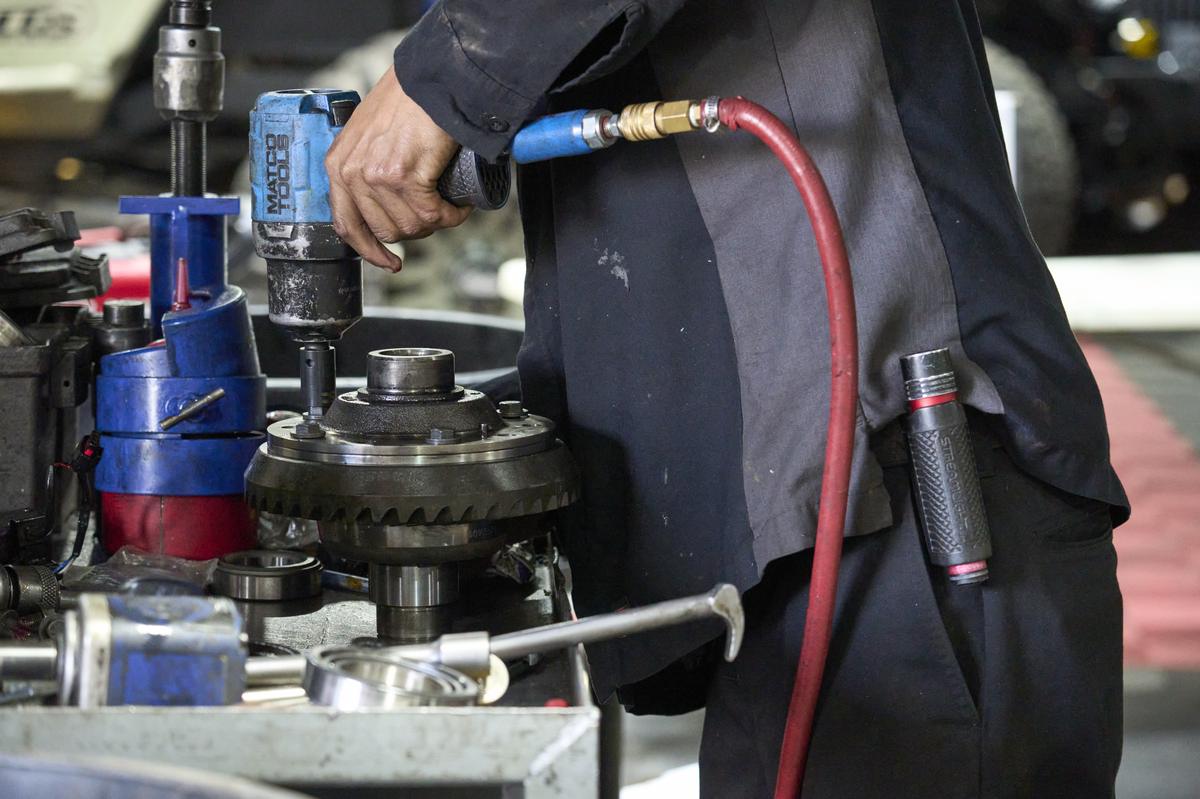
If your gears were quiet after installation but suddenly developed noise, the issue is often related to the installation rather than the gears themselves.
A common cause is a bearing or bearing race that wasn't fully seated during assembly. Over time, it can shift under load, changing the gear contact pattern and creating noise.
Quiet at First, Then Gradually Became Louder
If the noise slowly increased over hundreds or thousands of miles, improper break-in is often the culprit.
New ring and pinion gears require a proper break-in procedure to prevent excessive heat buildup during the first several heat cycles. Skipping or shortening this process can accelerate wear and eventually create gear noise.
For the full procedure, see our guide on breaking in ring and pinion gears.
When Does the Noise Occur?
The driving condition where the noise appears is one of the most valuable diagnostic tools.
Noise During Acceleration
A whine or gear noise that's only present while accelerating typically points to a pinion depth issue.
Improper pinion depth changes how the ring and pinion teeth mesh under load, often creating noise when power is applied.
Noise During Deceleration
If the noise is only heard when letting off the throttle, the problem is commonly related to pinion bearing preload.
Incorrect preload can allow the pinion to move slightly during deceleration, changing the gear mesh and producing noise.
Noise While Cruising or Maintaining Speed
If the noise only occurs under light throttle while maintaining speed, backlash may be the cause.
Backlash is the amount of clearance between the ring and pinion gears. If it's outside specification, gear noise often becomes noticeable during steady cruising.
What Does the Noise Sound Like?
The sound itself can provide valuable clues.
Metallic Whine or High-Pitched Noise
A whining or metallic gear noise is typically associated with the ring and pinion gear setup.
This can result from incorrect gear pattern, improper setup, or changes in gear contact over time.
Growling or Groaning
A growl or groan often indicates bearing wear or damage.
Carrier bearings, pinion bearings, and wheel bearings can all produce similar sounds as they begin to fail.
Humming Noise
Not every drivetrain noise comes from the differential.
A steady humming sound is frequently caused by tire tread patterns or uneven tire wear, especially with aggressive off-road tires.
Is the Noise Cyclical?
If the noise repeatedly gets louder and quieter while driving at a constant speed, the differential may not be the problem at all.
A cyclical vibration or noise is often related to the driveshaft. An imbalance, worn U-joint, or driveline issue can create a repeating vibration that changes in intensity as the shaft rotates.
Don't Ignore Vehicle Speed
The speed where the noise occurs can also help isolate the source.
Different drivetrain components resonate at different speeds. This is especially useful when diagnosing vibrations, since certain parts may only produce noticeable symptoms within a specific speed range.
Pay attention to whether the noise appears:
- At low speeds
- Between specific speed ranges
- Only at highway speeds
- Under load or while coasting
These details can help determine whether the issue is related to the gears, bearings, driveshaft, tires, or another drivetrain component.
The Bottom Line
Differential noise can be frustrating, but replacing parts without identifying the root cause often leads to unnecessary expense and continued problems.
The more information you can provide, including when the noise occurs, what it sounds like, how it developed, and the speeds where it's most noticeable, the easier it is to accurately diagnose the issue.
A proper diagnosis is the foundation of a successful repair. Whether you're installing new gears, rebuilding a differential, or tracking down an unfamiliar noise, Yukon Gear & Axle offers premium ring and pinion gear sets, master overhaul kits, bearings, and axle components engineered for reliable performance. Combined with expert technical support, we have the parts and knowledge to help you get the job done right the first time.
If you're looking for a qualified professional, use the Yukon Master Installer Locator to find a certified Yukon installer near you. Our Master Installers have completed Yukon training and have the experience to properly set up gears and diagnose drivetrain issues, helping ensure your vehicle performs the way it should on the road and on the trail.
Differential and Gear Noise FAQs
Why does my differential whine only when I accelerate?
A whine that appears only under acceleration typically points to a pinion depth issue. Improper pinion depth changes how the ring and pinion teeth mesh under load, creating noise when power is applied.
Why does my differential make noise only when I let off the gas?
Noise heard only during deceleration is commonly related to pinion bearing preload. Incorrect preload can allow the pinion to move slightly when you lift off the throttle, changing the gear mesh and producing noise.
What causes gear noise at a steady cruising speed?
Gear noise under light throttle at a constant speed often indicates backlash outside of specification. Backlash is the clearance between the ring and pinion gears, and an incorrect setting becomes most noticeable during steady cruising.
What is the difference between a differential whine and a growl?
A metallic, high-pitched whine is typically associated with the ring and pinion gear setup or contact pattern. A growl or groan usually indicates bearing wear or damage, which can come from the carrier bearings, pinion bearings, or wheel bearings.
Is a humming noise always the differential?
No. A steady hum is frequently caused by tire tread patterns or uneven tire wear, especially with aggressive off-road tires, rather than by the differential.
Why did my new gears get louder after a few thousand miles?
A gear set that was quiet at first and gradually became louder usually points to improper break-in. New ring and pinion gears require a proper break-in procedure to prevent excessive heat buildup during the first several heat cycles, and skipping it can accelerate wear.
What does it mean if the noise rises and falls at a constant speed?
A cyclical noise or vibration at a steady speed often is not the differential at all. Driveshaft imbalance, a worn U-joint, or another driveline issue can create a repeating vibration that changes in intensity as the shaft rotates.
Share Article:

No comments yet. Be the first to add comment!
Leave a comment
Your email address will not be published. Required fields are marked with *


