


Yukon blog

Proper Gear Break-In - Video
Gear break-in consists of controlled heat cycling of the gear set in a way that properly seasons or hardens the gear’s contact surfaces. It is a series of test drives. These critical first few miles of drive time can be the difference between a gear-melting headache and years of carefree driving. Failure to properly break-in your gear set can result in damaged, failing gears and a complete re-do. Once the wrenches have been laid down and the gears have been properly installed with backlash and preload correctly set there’s still more to do. The gear set must be broken in on urban roads and the freeway because different vehicle speed ranges produce different heat cycling. Towing is a whole other ball game. If you tow you’ll need an additional round of break-in because the physics of towing puts additional pressure on the pinion and slightly changes its position on the ring gear teeth… it’s like you’re hardening a new spot on the gear teeth. Check out the accompanying video for more specifics about proper gear break-in procedures.
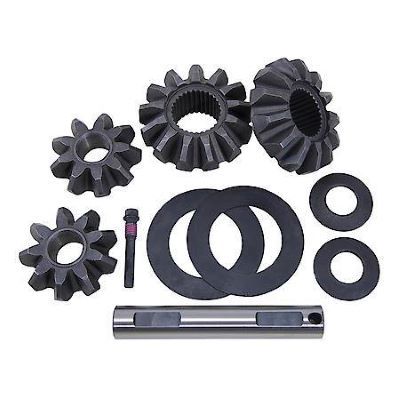
How It Works: Spider Gears - Video
Spider gears are primetime players inside the differential. Also known as satellite gears, spider gears rotate around the side gears in the differential carrier. Side gears may also be referred to as axle gears or planetary gears. To spot spider gears look for the gears with the cross-pin shaft going through them. Read this article in Español What Gears Do The diff’s array of spider and side gears take the rotational energy from the driveshaft and help redirect it outwards to the axles and on to the tires. More importantly, they also play a key role in allowing the tires to rotate smoothly at different speeds when the vehicle is turning. Gears In Trouble Broken spider gears will make a grinding or banging sound when the vehicle is turning because the difference in wheel speeds causes the chatter. You usually won’t hear them when traveling in a straight line because the spider gears remain motionless within the carrier in this instance. But, if they are bad enough, compromised spider gears will make noise even when going straight. When you hear a loud differential think of metal flakes being formed and circulated throughout the unit, usually damaging the vulnerable bearings first. So, noise means trouble. In some cases, the damage may not be the gears themselves. When the spider gears are in motion they rotate on the cross-pin shaft, especially when the vehicle is turning a corner. But there are situations that can cause over spinning and the result can be a heat-scored cross-pin shaft. A common scenario is getting stuck in the mud or snow and free spinning your wheels trying to break free. When this happens, the spider gears can rotate on the cross-pin shaft so quickly that the differential oil is slung away, resulting in metal-on-metal wear. In extreme cases the cross-pin shaft and the gear get so hot that they melt each other, sometimes to the point where they weld themselves together. Damage such as this can not only damage the spider gear set, but also destroy the carrier and ring and pinion gear set. Spider Gear Replacement When replacing spider gears you are, in fact, replacing both the spider gears and the side gears. Over the miles these gears mesh and wear in unison, so dropping in new spider gears with the original side gears can cause an imbalance. Yukon Gear & Axle and USA Standard Gear spider gear kits include two side gears, two pinion gears, a cross pin shaft, a roll pin, and thrust washers. Installation is relatively straightforward. For a more in-depth look, view the accompanying installation video from our YouTube channel. contact us at 866-631-0196 Shop Spider Gear kits
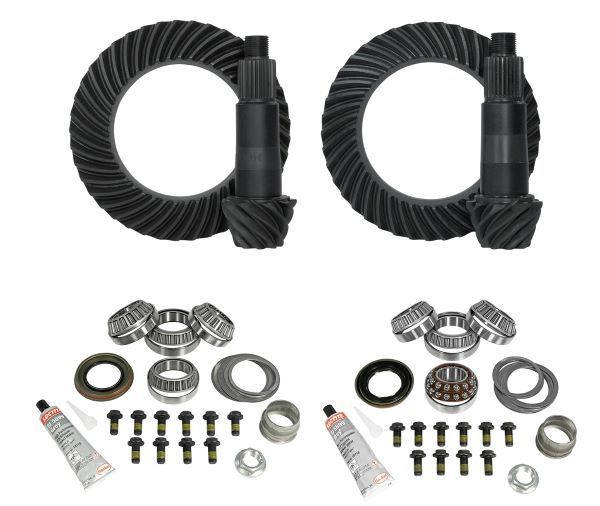
Escogiendo la relación de transmisión correcta-Video
Existen tres razones principales para reemplazar los engranajes de tu vehículo. El primero es para recuperar la capacidad de la conducción y la eficiencia de combustible de un vehículo de conducción diaria que ha sido modificado con rines y llantas más grandes. El segundo es afinar las características de rendimiento de un vehículo que es dedicado para todoterreno, donde el enfoque está más en el poder y la aceleración. El tercero es mejorar la eficiencia del combustible. El video adjunto describe el por qué y las consideraciones que deben tenerse en cuenta para encontrar la relación de transmisión correcta para su vehículo.
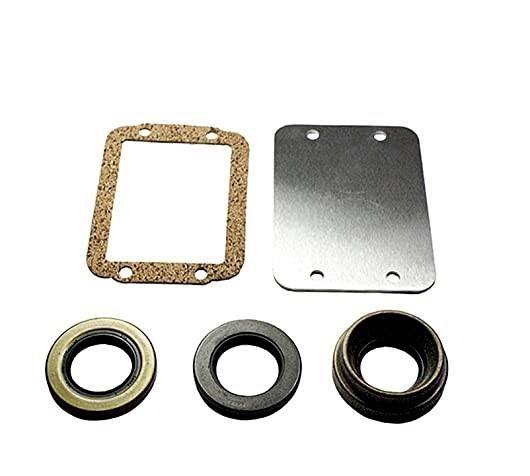
How It Works: Yukon Dana 30 CAD Delete Kit
What is CAD? What is CAD? It’s not short for Cadillac… In this case it’s not the acronym for Computer Aided Design… For our purpose CAD stands for "Central Axle Disconnect." At its core, the Yukon Dana 30 CAD Delete Kit blocks off the vacuum actuated engagement of four-wheel drive in Dana 30 differentials. Select Jeep vehicles produced from 1984 to 2001 are equipped with the automaker’s reverse rotation Dana 30 differential that’s outfitted with the Central Axle Disconnect (CAD) system. The system components, located on the passenger-side axle tube, consist of a two-piece splined shaft and a coupler that a vacuum-operated shift fork actuates to connect or disconnect the axle, which engages or disengages four-wheel drive. Dana 30 Heritage The Dana 30 has been the go-to front diff for the Jeep Wrangler since the model’s Jurassic Period… CJ-5 models of the early 1970s. Available in high- and low-pinion versions as well as standard and reverse rotation versions, the Dana 30 is an important building block in the Jeep hierarchy. There are tons of aftermarket parts for this differential and spares waiting for rescue in junkyards across the country. CAD Versus The Elements Time is no friend to the CAD system. The vacuum lines can crack, the vacuum motor can fail, or the system can be compromised in another manner, and cause the Jeep to be stuck in two-wheel-drive… that’s no fun. Further, the two-piece axle is not as strong as a one-piece design. Fortunately, the stronger and more reliable one-piece axle from a TJ or ‘non-disconnect’ XJ are direct swaps. The catch… sealing the housing post-swap. Yukon To The Rescue Enter the Yukon Dana 30 CAD Delete Kit. It consists of a disconnect housing blocking plate, gasket, and inner axle seals that will accommodate a one-piece axle design. Yukon Dana 30 CAD Delete Kit Applications 1984 - 2001 Jeep Cherokee XJ 4WD 1984 - 1998 Jeep Cherokee XJ Sport 4WD 1986 - 1992 Jeep Comanche MJ 4WD 1984 - 1991 Jeep Grand Wagoneer ZJ 4WD 1993 Jeep Grand Wagoneer ZJ 4WD 1987 - 1995 Jeep Wrangler YJ 4WD End Of The Trail The Dana 30 has been around since the prehistoric days of the Jeep brand… and it’s not going anywhere. Neither is Yukon Gear & Axle. We have a vast inventory of replacement parts that will keep Dana 30s on the road and performance products that will improve the breed. Happy Wheeling. contact us at 866-631-0196 Shop CAD Delete Kits
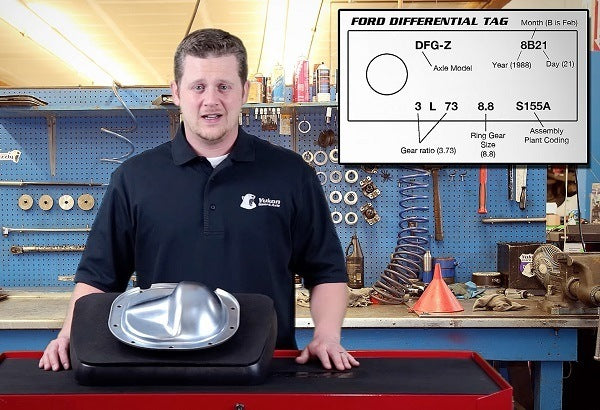
Decoding Differential Tags - Video
Auto manufactures have made it possible to glean basic but useable differential information by means of tags, stickers or stampings on the differential. The tags are usually affixed to the pumpkin by a diff cover bolt and stickers can be on the housing or axle tube close to the housing. The “direct from the source” aspect of this information makes it hyper accurate, overriding any confusing make, model, engine, and transmission information mash-up. No late night research needed. It’s all right there, straight from the manufacturer. The accompanying videos outline what info is on Ford and GM tags and what it means to you.